Wonder Project J: Mechanical Boy Pino — You Don't Play the Hero. You Raise Him.
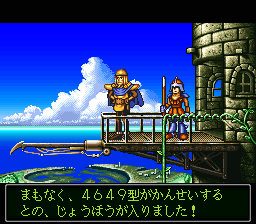
Most games hand you a hero and a controller and let the two become one. Wonder Project J: Kikai no Shōnen Pīno (Enix, 1994) refuses that contract entirely. You never touch Pino, the clockwork boy at its centre. You play Tinker, a tiny interface robot, and your entire vocabulary is pointing, praising, scolding and patience. Pino decides what to do with a hoe, a trumpet or a sword; you decide whether what he just did was right — and he remembers. Thirty years before "AI alignment" became a dinner-table phrase, this Super Famicom cartridge was already a game about teaching a machine mind what things are for, what people value, and when not to fight. This guide treats the raising system as what it is: the whole game. Below you will find the complete parameter map (sixteen personality parameters in four opposed groups, plus the gauges that can kill him), all ten acts and the seven "heart circuits" they awaken, the preparation targets documented by the classic walkthrough for the acts that stop new players cold, and an honest account of the endings — which are not chosen by stats in the way most guides imply.
A note on names and versions: This article describes the original Japanese Super Famicom cartridge, the only official release; there was never an official English edition. English parameter and circuit names below follow the long-circulating English fan translation and its walkthrough literature. Nothing here is taken from the sequel, Wonder Project J2: Korlo no Mori no Josette (Nintendo 64, 1996), whose heroine, setting and hidden-parameter design are different. Where a figure rests on a single classic source — most preparation thresholds do — the table says so.
Quick Facts
| Item | Detail |
|---|---|
| Japanese title | ワンダープロジェクトJ 機械の少年ピーノ (Wandā Purojekuto J: Kikai no Shōnen Pīno) |
| English title | Wonder Project J: Mechanical Boy Pino (descriptive rendering; no official English release — not to be confused with the N64 sequel Wonder Project J2) |
| Platform | Super Famicom (Japan only) |
| Release date (Japan) | December 9, 1994 |
| Developer | Almanic Corporation |
| Publisher | Enix |
| Director / design / script | Takashi Yoneda |
| Producer | Hiroki Fujimoto (Enix) |
| Character design | Toshihiro Kawamoto |
| Music | Akihiko Mori |
| Genre | Raising simulation / communication adventure |
| Players | 1 |
| Price at release | ¥11,800 |
| Cartridge | 24 Mbit (3,145,728 bytes), HiROM + FastROM, battery-backed save RAM; model SHVC-APJJ; internal title "WONDERPROJECT J" (see note at the end) |
Overview
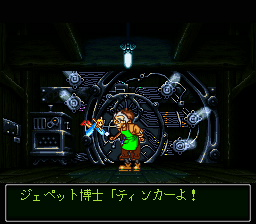
Fifty years before the story opens, war wrecked the island of Corlo, and humanity built the Gijin — humanoid robots — as the labour force that restored it. The restoration succeeded, and gratitude curdled: Gijin, stronger and more capable than their makers, are now persecuted. Dr. Geppetto, the Gijin's creator, built one final answer — Model 4649, a Gijin boy indistinguishable from a human child, carrying a mysterious device called Circuit J. On the day of the boy's completion, soldiers arrest Geppetto on a fabricated charge of treason. His interface robot Tinker turns, in desperation, to the person on the other side of the television screen: you.
What follows is a ten-act raising adventure in side view. You move Tinker around each scene as a cursor with a body. Point at an object and Pino walks over and does something with it — his best guess, which early on is cheerfully wrong about almost everything, edibility included. Witness the action, then judge it: praise (X button) teaches "that was right," scolding (Y button) teaches "not that," and a second scold becomes a smack. Learned behaviours stick; wrong lessons can be re-taught. Layered under the behaviour is a full parameter engine — sixteen personality parameters, stress, and two energy gauges — that decides whether Pino can do the thing an act demands, from crossing a log bridge to standing his ground in a duel. Event battles are fought automatically: you watch the boy you raised perform, with his parameters and a measure of luck settling it.
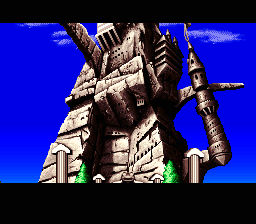
Progress is measured in hearts. Circuit J is locked behind seven "heart circuits" — a heart that loves nature, a heart that loves sports, an adventurous heart, a heart that knows when to fight, a heart that entertains others, a courageous heart, a heart that loves others — and each major act awakens one of them through the people Pino meets: old Fam on his farm, the sports festival, a penniless treasure hunter, the Royal Guard trials, a circus, a gentleman thief, a princess. Money (in Corlo, the island's currency), a shop full of training goods and strange chips, and an island map of farm, forest, pier, mine, castle and town fill the space between the set pieces.
Why It Still Matters
First, the premise has aged into relevance. A game about patiently shaping a learning machine's behaviour — rewarding the right action, correcting the wrong one, discovering that what you reinforced is exactly what you get, including the failure modes — reads differently in the 2020s than it did in 1994. Pino ignoring orders when his Trust collapses, turning timid when his Confidence is neglected, or refusing a fight because you raised his Kindness too high for the act that needs one, are not scripted jokes; they are the system reporting your teaching back to you.
Second, the craft. Almanic — the team behind E.V.O.: Search for Eden — built a raising simulation with the production values of a television anime: character design by Toshihiro Kawamoto, animation direction from Umanosuke Iida's team, and Pino's image voice by Noriko Hidaka. Square Enix's own SAVE PROJECT archival work, presented at CEDEC 2021, excavated the game's design documents — including a 133-page proposal for its earlier incarnation as "Geppetto's Son" and a list of 156 candidate actions for what a boy might do with a stick — which tells you how seriously the studio took the idea that a character's behaviour catalogue is the game design.
Third, the structure was unusual for its shelf. A console game you cannot play directly, whose sequel hook is not a harder boss but a faster, better upbringing — the post-game evaluation run described in §5 — had few peers in 1994 and still has few now.
Highlights
- Indirect control that actually works. Pointing, praising and scolding sound like a gimmick; in practice the praise/scold timing window makes teaching feel like a conversation, and re-teaching a bad habit you accidentally reinforced is a small drama every time.
- A personality you can read. The four parameter groups are opposed pairs, and the group's average that runs highest becomes Pino's personality — the game tells you who you are raising, and his idle guesses about new objects follow that personality.
- Seven hearts as a syllabus. Each act is a curriculum disguised as an adventure: farming teaches nature, the festival teaches sport, the rescue teaches courage. The heart circuits make the lesson plan explicit without making it feel like school.
- Consequences with a price tag. Let either energy gauge hit zero and Pino breaks down: the documented cost is 3,000 Corlo and three lost days — and if you cannot pay, the game ends. Kindness to animals, pudding economics and battery management are survival skills here.
Strategy Essentials
1. The teaching loop — the only "combat system" you directly control
Everything in this game is downstream of one loop:
  POINT (A: direct Pino to an object)
        |
        v
  PINO GUESSES an action  --->  coloured lamp lights:
        |                        red = Aggression group changed
        |                        yellow = Athleticism group changed
        |                        blue = Intelligence group changed
        |                        green = Sensitivity group changed
        v
  JUDGE IT:  X = praise ("that was right" -> behaviour learned)
             Y = scold  ("not that" -> behaviour rejected / relearn)
             Y twice = a smack (strong correction, use sparingly)
        |
        v
  Parameters shift -> personality tilts -> the next event's checks change
Three rules govern the loop. Timing is the lesson: praise or scold must land right after the action you mean; Pino associates your judgement with what he just did, not with what you intended. Learned is not the same as able: a mastered behaviour still fails if the parameters behind it are too low for the event — the acts below check both. Trust is the licence to teach: Trust below 20 and Pino may start ignoring instructions; below 10 he says he hates you and ignores them more; at 0 he refuses outright — with two documented exceptions that always work, movement orders and pudding. Praise restores a little Trust; scolding and bad experiences cost it; pudding, the Gijin's favourite food, restores a lot.
Your other controls are housekeeping: A again makes Pino run (which drains Health faster), B stops him and lets Tinker pick up and carry objects, and Select opens the status screen — check it constantly; it is the only place the whole parameter picture is visible at once.
2. The parameter map — sixteen personality parameters, three gauges
Pino's status screen lists sixteen personality parameters in two columns. Ten of them belong to four named groups; six stand outside the groups; Stress, Health and Energy sit alongside as gauges rather than personality. The hacking literature verifies each personality parameter on its own storage offset with a maximum of 99; treat 99 as the documented cap for the trainable parameters.
The four groups are two opposed pairs. Aggression opposes Sensitivity, and Athleticism opposes Intelligence: as a rule, training one side of a pair pushes the other side down (the Japanese reference literature notes exceptions depending on the object and the action). Whichever group's average is highest sets Pino's current personality, and personality colours both his idle behaviour and his guesses about objects he has not been taught.
| Group | Parameter | What it governs | How it rises (representative, documented routes) |
|---|---|---|---|
| Aggression | Attack | Damage Pino deals in event battles | Using weapons; defeating Gichū (insect robots) |
| Aggression | Defense | Blunting enemy attacks in battles | Praying at a charm/shrine; defeating Gichū — documented as having few big raising routes, so start early |
| Athleticism | Arm Power | Swinging, throwing, carrying, climbing ropes | Handling and lifting objects; dumbbell and ball training |
| Athleticism | Leg Power | Kicking, jumping | Kicking objects; soccer-ball training |
| Athleticism | Balance | Narrow paths, log bridges, wielding long objects | Ball-riding (circus ball) practice; log-bridge training |
| Intelligence | Reasoning | Thinking problems through; several event checks | Reading books |
| Intelligence | Imagination | Having new ideas; several event checks | Reading the encyclopedia |
| Sensitivity | Feeling | How strongly things affect him | Smelling things; praying |
| Sensitivity | Expression | Singing and playing instruments | Singing; playing instruments such as the trumpet |
| Sensitivity | Kindness | Gentleness toward people and animals | Reading picture books — handle with care: too high and he may flee from a weapon or abandon a required fight |
| — (ungrouped) | Confidence | Standing his ground; checked by many events | Being praised — low Confidence makes him flee from animals, and in battle it drains as he is hit until he surrenders |
| — (ungrouped) | Honesty | Earnestness; steadier, quicker learning | Everyday correct training; picture books and farm work are documented routes |
| — (ungrouped) | Diligence | Perseverance (the Japanese konki): not tiring of repetition; supports consecutive attacks in battle | Steady repeated training; the classic item lists tie the "Konki" candy to this parameter |
| — (ungrouped) | Charisma | Presence; performance and crowd-facing checks | Ball and music training in the classic item lists (circus ball, trumpet, sheet music) |
| — (ungrouped) | Trust | Whether Pino obeys you at all (thresholds in §1) | Praise (small) and pudding (large); falls when scolded or hurt by experiences |
| — (ungrouped) | Luck | A quiet modifier on many checks and events; critical hits in battle | Praying is the documented everyday route — at least one passage is documented as impassable, even game-ending, if Luck is too low |
| Gauge | Stress | Condition, not personality: high Stress blunts the effect of items | Rises with head work; falls with physical exercise |
| Gauge | Health | Physical energy; also the battle hit-point pool | Food, batteries and charging (below) — maximum 500 |
| Gauge | Energy | Mental energy for head work | Food, batteries and charging — maximum 500 |
Energy management is the game's clock and wallet in one. Physical actions and dashing drain Health; thinking actions drain Energy. Below 30 Health (or below 20 Energy) Pino shows distress animations; at 10 or below he can barely move; at zero in either gauge he breaks down, repairs cost a documented 3,000 Corlo — thirty times the price of a normal recharge — three days pass, and if you hold less than the fee, the run ends. The cheap routine is the charging pod at home: a documented 100 Corlo and a day's sleep restores both gauges to 100 (it does nothing if they already exceed 100), while foods and batteries can push them up to the 500 cap. Watch Stress before spending on recovery: the classic item lists warn that chargers and batteries work poorly on a stressed Pino, so exercise first, then feed.
Personality, read at a glance:
        Aggression average highest  -> short-tempered, rough Pino
        Athleticism average highest -> sporty, physical Pino
        Intelligence average highest -> studious honour-student Pino
        Sensitivity average highest -> eccentric Pino (tastes things,
                                       prays at things, surprises you)

        Aggression <---- opposed ----> Sensitivity
        Athleticism <--- opposed ----> Intelligence
Do not chase a "balanced" boy by default. Acts check profiles, not averages: the Royal Guard act wants a fighter who is, for one notorious conversation, almost aggressively un-gentle, while the farm act wants the opposite. Raise for the act in front of you, and use the opposed pairs deliberately — training the opposite group is the documented way to bring an overgrown group back down.
3. The ten acts and the seven hearts
The story runs to ten acts. Acts 1–9 pair teaching with a set-piece problem; Act 10 is the resolution. Seven acts award a heart circuit, and the circuit list is the game's table of contents: to awaken Circuit J, Pino must grow all seven hearts. The "preparation" column collects the figures given by the classic English walkthrough (Solomon warrior's FAQ, v2.2) — they are that guide's recommended targets, not numbers the game displays, and no second source publishes a full competing set, so treat them as experienced guidance rather than as the game's literal gates.
| Act | Title (fan-translation usage) | The lesson / set piece | Heart circuit | Documented preparation (classic walkthrough figures) |
|---|---|---|---|---|
| 1 | The Birth of Model 4649 | Tutorial: movement, carrying, judging actions, the status screen | — | Take the tutorial; it is the only free lesson in the controls |
| 2 | 46! | Rescue Gijin #46 from bullying Gichū | — | Master throwing the rubber ball; Arm Power ≈30, built with the steel dumbbell |
| 3 | Old Fam's Farm | Work Fam's farm; be gentle with the farm dog | Love of Nature | Arm Power, Reasoning and Imagination ≈50; master hoe and seeds; keep Aggression low |
| 4 | Do Your Best, Model 4649! | Win the Corlo sports festival (foot race, shot put, hole-in-one, free kick), then the pier episodes and Add's treasure hunt | Love of Sports; Adventurous Spirit | Festival: Leg Power ≈90, Arm Power ≈80, master golf club, soccer ball and treasure box. Treasure tests: Attack ≈60, Arm Power ≈50, Reasoning ≈50, Luck ≈90; Feeling ≈50 with the trumpet for the pier scenes |
| 5 | Messala's Test | The Royal Guard recruitment contest at the castle: duel Gijin No. 481, then the guards Jeanne and Gardy | A Heart That Knows When to Fight | Attack ≈95, Defense ≈90, Confidence ≈90, Diligence ≈90, Intelligence high, Health ≈275 or more — and, for the Jeanne conversation, low Aggression-group, Athleticism-group and Sensitivity averages with low Kindness |
| 6 | The Circus Has Arrived! | Sing for money at Mimi's café, then become a circus star with Pierre's troupe | A Heart That Entertains Others | Master the circus ball and singing; Balance ≈90; Confidence, Kindness and Expression ≈80 |
| 7 | A Great Rescue Plan | Learn lock-picking and help the thief Lynx break Mimi out of the castle | — (story act) | Train lock-picking on every door type; one documented trick requires low Reasoning so Pino performs the head-spinning gag with the rubber ball |
| 8 | Gijin Model 4630, Giryū | Enter Corlo Mine, pray, shout the door open, and face the dragon-like Giryū | Courageous Heart | Luck ≈50 or more with low Kindness for the door; Leg Power ≈90 and Balance ≈90 inside; know how to pray |
| 9 | Queen Tiffany | Cross the forest, take Corlo's Sword, and win Princess Tiffany's trust in the tree dungeon | A Heart That Loves Others | Master using flowers; Confidence ≈70, Kindness ≈80, Health high (the walkthrough advises ≈450) |
| 10 | Immortality at Corlo Island | Finale: Circuit J awakens and the island's crisis is decided | Circuit J itself | No training phase — this act plays out on the boy you have raised |
Two structural points deserve emphasis. First, the syllabus is cumulative: Arm Power trained for Act 2 is spent again in Acts 4, 5 and 8; Balance, the quiet stat of Act 6, is checked again in the mine in Act 8; Luck, easy to ignore for hours, gates both the treasure tests of Act 4 and the mine door of Act 8. Second, two acts demand that you lower things — Act 5's conversation check punishes the well-rounded, gentle boy that Act 3 rewarded, and Act 7 contains a step that only a low-Reasoning Pino will perform. The opposed-pair system in §2 is the tool for both problems: train the opposing group to pull a profile back down, rather than waiting and hoping.
4. Representative events: conditions and how to approach them
| Event | When / where | What is actually being checked | Guidance |
|---|---|---|---|
| First Gichū rescue | Act 2, island map | A learned behaviour (throwing) plus Arm Power ≈30 | Teach the throw on the rubber ball at home first, praising every correct throw; do not leave the house under-trained — this is the game's thesis statement |
| Farm work and the dog | Act 3, Fam's farm | Hoe and seed technique; Kindness in behaviour (praise gentle contact with the dog, scold kicking); low Aggression | Buy hoe and seeds in town before you go; the dog scene is an attitude check, not a stat check — your praise/scold timing is the answer |
| Sports festival, four contests | Act 4, Corlo racetrack | Leg Power (race, free kick), Arm Power (shot put), Balance via the golf club (hole-in-one) | Train in Corlo Forest: rope, log bridge, soccer ball are all there. The walkthrough itself warns the hole-in-one can refuse to fall even at the recommended figures — budget days and retry rather than over-grinding everything else |
| Add's three tests | Act 4, Corlo Pier, after three days of pier visits | Attack ≈60, Arm Power ≈50, Reasoning ≈50, Luck ≈90 | Luck is the long pole: build it by praying steadily from the early game, not in a panic before the pier |
| Royal Guard duels | Act 5, castle | Automatic battles: Attack, Defense, Health — and Confidence, which drains as Pino is hit until he surrenders | You cannot steer the fight. Arrive over-prepared, with Confidence high and Stress low, and remember almost every parameter feeds battles in some way |
| The Jeanne conversation | Act 5, castle | Group averages: the well-bred boy fails this one | Deliberately tilt the profile beforehand using the opposed pairs; this is the act that teaches you the personality system is real |
| Café singing, then circus tests | Act 6, Mimi's café / Pierre's circus | Expression and singing first (income), then Balance ≈90 with Confidence, Kindness, Expression ≈80 | Singing at the café is also the game's friendliest money loop — fund your training goods here before the circus tests |
| Lock-picking and the rescue | Act 7, back alley / castle | Learned technique across door types; one step needs low Reasoning | Practise on every door you can find before the night of the rescue; if the gag step will not trigger, Reasoning is the suspect — train physical groups to pull it down |
| The mine door and Giryū | Act 8, Corlo Mine | A shout that needs Luck ≈50 and low Kindness; then Leg Power and Balance ≈90 | Two opposite errands: pray Luck up at the Turtle God in the forest, and keep Kindness trimmed — the same boy rarely arrives correct by accident |
| Tiffany's dungeon | Act 9, forest tree | Confidence ≈70, Kindness ≈80, high Health | The mirror image of Act 5: now the gentle, kind profile is the key. Restore Kindness here — picture books are the documented route — and enter fully charged |
5. Endings: what actually decides them
Here this guide must correct a common assumption. Wonder Project J is often described as a multi-ending game in which your final stats select an ending. The documented structure is different, and the distinction matters for how you play: no parameter threshold is documented as an ending branch. Endings differ by playthrough and evaluation, as follows. (Per this guide's policy, the table gives conditions and the direction of each outcome only, not the content of the closing scenes.)
| Ending | Condition (documented) | Direction |
|---|---|---|
| First-run ending | Clear Act 10 on a first playthrough | The standard conclusion; the game then opens the evaluation mode below |
| Second-run ending (evaluation imperfect) | Clear the game again in the post-game evaluation mode without a perfect evaluation | A variant conclusion that follows from the evaluated second upbringing |
| True (secret) ending | In evaluation mode, clear every act within its prescribed number of days — a perfect evaluation | The conclusion the sequel Wonder Project J2 treats as its premise |
So what do parameters have to do with endings? Indirectly, but completely: the evaluation run is a speed trial of your teaching efficiency. Every day spent re-grinding Arm Power you neglected, repairing a breakdown you let happen, or re-teaching a behaviour you mis-reinforced in Act 2 is a day against an act's budget. The boy who reaches the true ending is not the boy with a particular stat line — he is the boy whose teacher wasted nothing. Plan a second run the way §3 is laid out: pre-train each act's documented targets during the previous act, keep Trust high so no order is ever wasted, pray Luck up early because two acts check it, and never let either energy gauge approach zero — a breakdown costs three days at once.
A development footnote supports reading the game this way: in Square Enix's CEDEC 2021 archive presentation, the producer recalled that a branching multi-ending was considered at proposal stage and not adopted — the shipped design replaced branching with this evaluation structure instead.
Who It's For
- Raising-sim devotees who want the genre's missing link between pet toys and Princess Maker-style scheduling: behaviour teaching, not timetable filling, is the verb here.
- Adventure-game players who like point-and-click scenes but are tired of inventory logic — the "puzzles" are a child's education, and the wrong answers are often funnier than the right ones.
- Animation fans: a 1994 cartridge that plays like a gentle TV anime, from a staff with real animation pedigree.
- Patience-rich, reflex-poor players: battles are automatic and nothing in the game tests your hands; everything tests your judgement of a small robot boy.
It is not for players who need direct control, visible quest markers, or a game that shows its requirement numbers — this one shows you a child's face and a status screen, and expects you to put the two together.
How to Play It Today
The game was released only in Japan, for the Super Famicom, and no official English edition exists; a complete English fan translation has circulated since the early 2000s and remains the way most English-speaking players meet the game. In the sources checked for this article, no port for current platforms was listed — the realistic legal route today is the original cartridge on Super Famicom-compatible hardware. Cartridges are common on the Japanese second-hand market by the standards of 24 Mbit Enix titles, but remember what you are buying: saves live in battery-backed RAM that is now three decades old, so confirm save behaviour with the seller or budget for a battery replacement, and note that a dead battery takes your raised Pino with it.
- Original Super Famicom cartridge (SHVC-APJJ):
Find the original Japanese cartridge
Disclosure: The Rakuten and Yahoo! Shopping links are standard shopping links. Enkeisha does not earn a commission from purchases made through these links.
Find original hardware editions on eBay
As an eBay Partner Network affiliate, Enkeisha may earn a commission from qualifying purchases made through these links.
Search eBay listings (affiliate link)
Check the language, region, hardware compatibility, condition and authenticity before buying. Search results may include reproductions; links do not endorse individual sellers.