Estpolis Denki (Lufia & the Fortress of Doom) — The Deep Guide: the 99-Year War, the Old Cave, the Dragon Eggs, and Beating the Sinistrals Twice
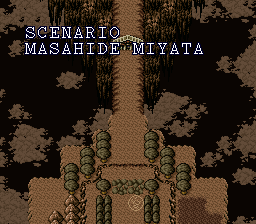
Most RPGs open with a village and a wooden sword. Estpolis Denki — released in English as Lufia & the Fortress of Doom — opens at the end of somebody else's RPG: four heroes at the height of their power storm a floating fortress and destroy four godlike beings, and two of them do not come home. Then the game jumps forward 99 years and hands you a teenager with almost nothing. This guide is built around that structure. It maps the timeline the series is famous for, tables the party, the bosses, the magic and the endgame gear, and treats the two systems that actually decide a run — the level-gated Old Cave and the three sets of Dragon Eggs — as the core of the game, because they are.
A spoiler note: the boss and timeline tables necessarily discuss the game's framing and its final boss. Plot twists beyond what the tables require are kept to the minimum needed to explain a fight.
Quick Facts
| Item | Detail |
|---|---|
| Japanese title | Estpolis Denki (エストポリス伝記, officially rendered "Biography of Estpolis") |
| English title | Lufia & the Fortress of Doom |
| Platform | Super Famicom / Super Nintendo Entertainment System |
| Release | Japan: 25 June 1993 · North America: 1993 (published sources differ between November and December 1993, so no month is asserted here) · No original European SNES release |
| Developer | Neverland (Neverland Company) |
| Publisher | Taito (Japan and North America; the only series entry released under the Taito label in North America) |
| Director / Scenario | Masahide Miyata |
| Music | Yasunori Shiono, with Aki Zaitsu and Naomi Kuroda |
| Genre | Role-playing game (turn-based, random encounters plus scripted battles) |
| Series position | 1st entry in the Lufia / Estpolis series by release order; by story chronology it is the later half of the two-game arc — see the timeline table in Strategy Essentials §1 |
| Cartridge | 8 Mbit (1,048,576 bytes), LoROM, ROM + RAM + battery — progress is saved in one of three slots by speaking to a priest/cleric in a town church |
| Players | 1 |
| Follow-up | Estpolis Denki II / Lufia II: Rise of the Sinistrals (Super Famicom, 24 February 1995 in Japan) — a prequel, not a continuation; see §1 |
Two naming warnings before the tables begin, because almost every mistake made about this game is a naming mistake. First, the four antagonists are the Sinistrals in English and the 四狂神 ("Four Mad Gods") in Japanese, and their individual titles do not line up cleanly between versions: this guide gives both names in every table. Second, the English version of this game only swaps two titles — in the English Fortress of Doom, Daos is presented as the Sinistral of Chaos and Amon as the Sinistral of Terror, the reverse of the Japanese original and of every later entry, where Daos is Terror and Amon is Chaos. The characters, fights and strategies are unaffected; only the labels move.
Overview
The game is in two time periods, and the first one is playable. You begin in control of Maxim's party — Maxim, Selan, Guy and Artea, at roughly level 79 by the walkthroughs' reckoning — as they climb the Fortress of Doom (Doom Island; 虚空島 in Japanese) and fight the four Sinistrals in sequence. Maxim and Selan are lost when the fortress falls. Peace holds for ninety years, and the main game is set nine years after that — 99 years after the prologue, a figure Japanese sources state directly and English sources usually round to "a hundred years."
In the main game you play a red-haired descendant of Maxim (player-named; "the Hero" here) in the town of Alekia. His childhood friend Lufia — a girl who appeared in Alekia years earlier with no memory beyond her name — is pulled into the crisis when the neighbouring kingdom of Sheran is attacked and Gades, supposedly destroyed in the prologue, walks out of the ruins and announces that the four Sinistrals are returning. The journey that follows is a tour of kingdoms, towers, caves and sunken places, held together by three recurring errands: finding the surviving heroes of the old war (Guy and Artea), recovering Maxim's sword, the Dual Blade, and preparing for a second assault on the same fortress you cleared in the prologue.
Underneath the tour sit the systems this guide is really about:
- Fixed, old-school targeting. Battles are turn-based and menu-driven, viewed from a first-person perspective against the enemy group. If two of your characters target the same enemy and the first one kills it, the second character's attack is spent on the corpse and misses. There is no automatic retargeting. Splitting targets is a skill this game demands from the first hour.
- Magic is learned by level, not bought. Each caster's spell list grows on a fixed schedule as they level (Aguro, pointedly, learns nothing at all). The important spells and their learning levels are tabled in §4.
- The Old Cave (いにしえの洞窟). A seven-floor dungeon tied to the adventurers' guild at Grenoble. Deeper floors unlock as your party's level rises, each floor holds a guild "treasure" to trade in plus genuinely strong equipment, and two of the game's Dragon Eggs are inside it. It is the direct prototype of the famous 99-floor Ancient Cave of Lufia II — but it is not that cave: it is fixed-layout, it does not reset your level, and it does not take your equipment away. See §6.
- Dragon Eggs. Eight eggs per set, three sets in total (24 eggs). Each completed set is taken to the Egg Dragon's shrine and exchanged for one of four wishes, including two pieces of "Might" equipment that are among the best in the game. See §7.
- A post-clear replay. Published guides consistently report a replay option (labelled "Try Again" / "Retry") with multiplied experience and gold. Guides describe the exact multiplier inconsistently, so no figure is asserted here — confirm the rate in-game.
Why It Still Matters
Estpolis Denki was Neverland's debut — the company was founded on 7 May 1993 and the game followed seven weeks later. Contemporary reception was warm rather than ecstatic (Famitsu's cross review totalled 28/40; several US magazines scored it near the top of their scales, and it was the top-selling Super NES game in the United States in February 1994), and later writers have often treated it as a warm-up for its celebrated prequel. That undersells it. The prologue structure — play the legend first, at full power, then live with its consequences a century later — became the series' identity: Lufia II exists because players wanted to play the war this game only shows the end of, and its ending lands precisely where this game's opening begins. The Old Cave matters in miniature, too: a level-gated, repeatable treasure dungeon run through a guild counter is a small idea here, and in Lufia II it grows into the Ancient Cave, one of the most imitated side-dungeons in the genre.
Highlights
- The prologue itself. Four bosses, a full-power party, and an ending you are meant to lose people to — then a title card's worth of silence and a boy in a field, 99 years later.
- The Old Cave rhythm. Every five levels of progress, the guild at Grenoble has a new floor for you. It turns levelling from a chore into a scheduled treasure run (table in §6).
- Mirror. One spell, learned by one character, quietly decides most of the game's hard fights. Bosses in this game cast; Mirror gives the spell back. See §3 and §4.
- The Dual Blade's double role. Maxim's sword is the strongest plot weapon in the game (ATP +300, Hero only — §8) and a character in the story: it responds to its bearer's spirit wave, it can be lost, broken and recovered, and the finale cannot be understood without it.
- Forfeit Island. A casino island (the English name is a warning) that also functions as the game's buy-back shop for things you have sold — a small, practical mercy in a game with limited inventory pressure and a lot of one-off equipment.
Strategy Essentials
Everything in this section is the core of the guide: the timeline, the party, the boss tables, the magic schedule, the Old Cave, the Dragon Eggs and the endgame gear. Two warnings first, because they shape every table that follows.
Warning 1 — There is no "Cave of Trials" in this game, and no 99-floor cave either. A "Cave of Trials" (試練の洞窟) is the opening dungeon of Lufia II, outside Maxim's home town of Elcid. It does not exist here. This game's repeatable dungeon is the seven-floor Old Cave at Grenoble (§6) — Japanese sources call it いにしえの洞窟, the same name Lufia II later gives its very different 99-floor randomised cave. Do not bring Lufia II cave rules (level reset to 1, no equipment carried in, randomised floors) into this game; none of them apply.
Warning 2 — Boss HP figures are deliberately not printed. Published guides disagree with each other on Sinistral HP — the same fight is listed with single values in one guide and wide ranges (for example "1,000–6,000") in another — so a precise HP column would be false confidence. What the guides do agree on, and what actually wins the fights, is in the tables: who you have, what the boss casts, and whether Mirror is the answer.
1. Story structure and the two-game timeline
Read this table before any series discussion, because the release order and the story order point in opposite directions — and this article never calls Estpolis Denki a prequel, or Estpolis Denki II a sequel-story, because both labels are wrong.
| Order | Event | Where it is played |
|---|---|---|
| Story year −99 | The Sinistrals rule from Doom Island (the Fortress of Doom). Maxim, Selan, Guy and Artea storm the fortress, defeat Gades, Amon, Erim and Daos in sequence, and bring the island down. Maxim and Selan are lost in the fall. This is the First Doom Island War (虚空島戦役) | Played as the prologue of this game; played in full as the whole of Estpolis Denki II (1995) |
| Story years −99 to −9 | Ninety years of peace. The old heroes age; Guy grows old, Artea — an elf — does not age at the human rate and survives into the new era | Background, told in dialogue |
| Story year 0 (nine years after the ninety) | Gades reappears and destroys Sheran's peace; the other Sinistrals are returning, because a Sinistral can revive the others so long as one survives. Maxim's descendant and Lufia set out; Aguro and Jerin join; Guy dies after passing on the search for Artea; the sunken fortress is raised and the Second Doom Island War is fought in the same fortress, ending against the fused Guard Daos | The main game of Estpolis Denki (this game) |
| Release order, for contrast | Estpolis Denki (1993) first, Estpolis Denki II (1995) second — the second-released game tells the earlier story | — |
STORY CHRONOLOGY (not release order)

  99 YEARS BEFORE THE MAIN GAME                    THE MAIN GAME
  ─────────────────────────────                    ─────────────
  Maxim · Selan · Guy · Artea                      The Hero (Maxim's descendant) · Lufia
        │   storm Doom Island                      Aguro · Jerin   (Artea survives to advise)
        │   defeat the four Sinistrals                   │
        ▼   Maxim and Selan are lost                     ▼   Gades returns at Sheran
  FIRST DOOM ISLAND WAR                            SECOND DOOM ISLAND WAR
  = prologue of Estpolis Denki (1993)              = main game of Estpolis Denki (1993)
  = the whole story of Estpolis Denki II (1995)
The practical consequence for a player: play this game first. Lufia II's ending is this game's opening cutscene with the context filled in, and it spoils — by design — almost nothing about the second war, while this game's prologue spoils the broad outcome of Lufia II. Release order is the intended order.
2. The party — both eras
The main party mirrors the prologue party role-for-role, which is deliberate: the Hero is Maxim's equivalent, Lufia is Selan's, Aguro is Guy's, and Jerin is Artea's. Japanese names are given because equipment and spell lists in Japanese sources use them (Aguro is アグロス, Jerin is ジュリナ).
| Character (EN / JP) | Joins | Role | Magic | Equipment notes |
|---|---|---|---|---|
| The Hero (主人公, player-named) | From the start, at Alekia | Front-line swordsman and secondary healer; the only character who can wield the Dual Blade | Learns healing and support magic by level: Strong (Lv 4), Courage (Lv 25), Champion (Lv 28), Valor (Lv 47) — see §4 | Heavy armour; endgame weapon is the Dual Blade (ATP +300), with the Zircon Sword (ATP +256) as the best shop/found alternative before and after it |
| Lufia (ルフィア) | Early: after the first return from Sheran | Primary offensive caster; the party's strongest magic attack and magic resistance, with support spells as well | Thunder, Water and explosion-type attack magic, plus numerous support spells; learns from Lv 1 (Flash is already on her list at Lv 1) | Light weapons only (wands, flails — and frying pans); physically frail, so she lives in the back of your targeting plan and at the top of your healing priority |
| Aguro (アグロス) | Early–mid: at Treck, after the visit to Guy | Pure physical attacker; the strongest melee fighter and the best physical defence in the party | None at all — the only party member who never learns a spell | Heavy armour, swords, axes and lances; endgame axe is the Zircon Axe (ATP +288). His low magic resistance is the party's structural weakness — he is who Mirror and healing are for |
| Jerin (ジュリナ) | Mid-game: rescued from Amon's servants, who intended her as a sacrifice, then forces her way into the party as guide at the lounge before the Lost Forest | Healer-archer; the party's dedicated healer and the only member who learns the Raise-type revival magic | Fire and Ice attack magic, and healing in depth; learns Mirror at Lv 32, the single most important spell level in the game (§4) | Bows (including Artea's handed-down bow) and wands; fast, with high intelligence and magic resistance. Best bow upgrade path ends at the Might Bow (ATP +148, group attack) from the Dragon Egg wishes |
And the prologue party, whom you control for the opening and meet again as legend, elder or memory:
| Character (EN / JP) | Role in the prologue | Fate / relevance in the main game |
|---|---|---|
| Maxim (マキシム) | Leader; swordsman; original bearer of the Dual Blade | The Hero's ancestor. Lost when Doom Island falls |
| Selan (セレナ; "Serena" in the Japanese credits romanisation) | Maxim's wife; powerful offensive caster — Lufia's role model in the party structure | Lost with Maxim |
| Guy (ガイ) | Pure physical fighter, the strongest of the four; no magic | Survives, ages, and dies in the main game after directing the party to find Artea |
| Artea (アーティ; "Arty" in Japanese) | Elf archer-caster; his bow attacks the enemy group | Survives into the main game thanks to elven lifespan; hands his bow down to Jerin |
3. Combat rules that decide fights
| Rule | What it means in practice |
|---|---|
| No retargeting | If a target dies before a later character's turn in the same round, that character's attack is wasted on it. Against groups, deliberately split your two physical attackers across different enemies; against a single boss this rule costs you nothing |
| Bosses are casters first | From the towers onward, most dangerous bosses win by magic, not by attack power. The counter is a spell, not armour: Mirror (§4) reflects enemy magic back at the caster while letting your own healing and buffs through — keep it up on the low-magic-resistance characters (Aguro first) and re-cast it as it wears |
| The enemy can Mirror too | Erim in particular may put Mirror on herself. When she does, stop casting attack magic into it and go physical until it lapses — your own Thunder coming back is how this fight is lost |
| Stat potions are permanent | Power, Great, Spell, Mind and Speed potions raise a stat permanently and drop throughout the game (and are one of the Dragon Egg wishes). Published guide consensus on allocation: HP potions to whoever has the least maximum HP, attack (Great) potions to Aguro, MP (Spell) potions to the Hero (his best spells are expensive and his MP pool is the smallest of the casters), Mind potions to Lufia |
| Save at priests, in towns | There are three battery save slots and saving is done by speaking to a priest/cleric at a church. There is no save point inside a dungeon: the Old Cave and the final fortress are both "go back to town to bank progress" designs |
| Levels are the difficulty setting | This game is honestly level-gated: guide after guide gives a recommended party level per boss because being under it is close to a guaranteed loss, and the Old Cave's floor unlocks (§6) are built on the same assumption. If a boss is a wall, the intended answer is almost always "clear the next Old Cave floor and come back" |
4. Magic essentials — who learns what, and when it matters
Magic is learned automatically at fixed levels; there is no spell shop and nothing to buy. Only levels that multiple published sources agree on are printed with a number; other key spells are listed by learner and role.
| Spell | Learner | Learned | What it does for you |
|---|---|---|---|
| Strong / Stronger line | Hero, Jerin (healing depth sits mainly with Jerin) | Hero: Strong at Lv 4 | Your basic single-target healing, from the opening hours onward |
| Flash → Thunder line | Lufia | Flash already known at Lv 1; stronger thunder spells follow as she levels | The party's main boss damage for most of the game. Thunder is the confirmed weakness line for the Sinistrals in the prologue fights (see the boss table in §5) — when in doubt against a Sinistral, Lufia casts Thunder |
| Trick | Hero / Artea-type support casters | — | Raises a physical attacker's power. The standard opening buff for Aguro (and for Guy in the prologue) |
| Courage | Hero | Lv 25 | Raises the whole party's defence — the pre-boss ritual from the mid-game on |
| Champion | Hero (also on Jerin's healing path) | Hero: Lv 28 | Fully restores one ally's HP. The boss-fight heal that matters |
| Dread | Lufia / support casters | — | Lowers enemy defence. Cast it early on physical bosses (Gades above all) and let the swords do the rest |
| Mirror | Jerin | Lv 32 | Reflects enemy magic back at the caster; your own healing and buffs still get through. The keystone spell of the second half — see §3 and the boss table. If Jerin is below Lv 32 as the towers begin, grind before you push on |
| Valor | Hero (prologue: Artea's party trick too) | Hero: Lv 47 | Fully restores the whole party's HP, at a heavy MP cost (35 MP in the published spell lists). The finale insurance policy |
| Raise-type revival | Jerin only | — | Jerin is the only party member who can revive the fallen with magic; without her, revival is an item (Miracle) problem. Protect her accordingly |
Aguro's row in this table is empty by design: he learns nothing, ever, which is why every buff, Mirror and heal the party owns ends up spent on him — and why his raw attack and defence numbers (§8) are balanced to be the party's best.
5. The Sinistrals and the major bosses
One table, in encounter order, covering both eras. "Party" matters more than any stat here: the same four gods are fought by a level-~79 party in the prologue and by a party roughly thirty levels lower in the second war, and the fights are tuned completely differently. Guide-suggested party levels are given as ranges where guides broadly agree; treat them as pacing advice, not game data.
| # | Boss (EN / JP) | When and with whom | What the boss does | The agreed counter |
|---|---|---|---|---|
| P1 | Gades (ガデス), Destruction | Prologue, Fortress of Doom, as Maxim's party | Physical powerhouse; in the prologue he is a demonstration, not a wall | Maxim and Guy attack; Selan casts Thunder (his confirmed weakness) every round; Artea opens with Trick on the attackers, then heals with Champion / Valor as needed |
| P2 | Amon (アモン), Chaos (JP: 混沌) | Prologue, next floor up | A magic user; the first fight that teaches the game's central lesson | Fighters attack; both casters establish Mirror on the party — starting with the low-magic-resistance fighters — and keep re-casting it so his own spells do the work |
| P3 | Erim (エリーヌ), Death (JP: 殺戮) | Prologue | Almost purely magical, and resistant to most magic herself | Mirror up, then go physical. Watch for her casting Mirror on herself — when she does, stop casting attack spells entirely until it lapses |
| P4 | Daos (ディオス), Terror (JP: 恐怖) — presented as "Chaos" in this game's English version, see Quick Facts | Prologue, throne room | The leader; the strongest caster of the four | The Amon plan, with more healing held in reserve: Mirror on everyone, physical pressure, Artea healing as required. The prologue party is built to win this — experiment freely, nothing carries over |
| M1 | Gades, again — alone | Main game, the ruins of Sheran, Hero (and Lufia) only | A scripted demonstration of the gap between eras: he announces the resurrection and cannot be beaten here | Do not waste items or treat this as a real fight. Survive the scene; the game is showing you the distance you have to close |
| M2 | The servant bosses of the towers and laboratories | Main game, mid-game (guide-suggested party levels climb from the teens into the 30s across this stretch) | A mixed set — physical bruisers, casters guarding keys, and at the Tower of Light a guardian who fights with magic only | Read the boss before spending: physical bosses get Dread + swords; magic-only bosses get the full Mirror treatment plus attack/defence buffs. Jerin's Mirror level (Lv 32, §4) lands in this stretch and changes its difficulty outright |
| M3 | Gades, second war | Final fortress, with Hero, Aguro and Jerin — Lufia is absent for this sequence (guide-suggested levels: mid-40s and up) | Purely physical, far harder than the prologue version, with a defence-lowering presence and heavy single hits | No Mirror needed — he casts nothing worth reflecting. Courage up, Dread him, Champion from Jerin (Hero as backup healer), and keep everyone's HP high rather than topped-up-and-greedy |
| M4 | Amon, second war | Final fortress, same three-person party | Magic, including party-wide spells and confusion | Mirror on everyone, refreshed constantly — Jerin re-casts even when it looks redundant, because a lapsed Mirror plus confusion is how this fight collapses. Fighters attack; Hero heals whoever loses Mirror and gets hit |
| M5 | Daos, second war | Final fortress, same three-person party (guide-suggested levels: around 50) | The full caster arsenal — thunder, ice, fire, defence-down and an amnesia-type attack that makes characters forget spells | The Amon plan at higher stakes: Mirror discipline, Trick on the fighters, and no reliance on a spell you cannot afford to have forgotten. Keep Miracles in reserve |
| M6 | Guard Daos (ガルディオス) — the fused Sinistrals | Immediately after M5, with Lufia restored to the party for the finale | Daos calls the others into himself mid-transformation; Lufia breaks free of the fusion, which is why the fused form is incomplete. The hardest sustained magic assault in the game | Full party, full resources — this is what you saved them for. Mirror on everyone and maintained, Valor / Champion healing, Lufia on Thunder when nobody needs her elsewhere, and spend Miracles and stat items without hesitation: there is nothing after this |
Two structural points are built into this table, and both are deliberate design:
- You fight the finale twice, and the game knows it. The prologue fights are the tutorial for the second war — same bosses, same fortress layout, a fraction of the levels. A player who learned "Thunder for Gades, Mirror for the casters" at level 79 already owns the whole endgame plan at level 45.
- The hardest stretch is fought a person down. Lufia's absence from M3–M5 removes the party's best offensive caster exactly when the bosses stop being polite. Jerin's healing load and the Hero's backup healing are not flavour in those fights; they are the strategy.
6. The Old Cave — the game's real progression system
The Old Cave sits on the small island by Grenoble (guides differ between "north" and "northwest" of the town; it is reached from Grenoble either way), and it is run through the adventurers' guild in the basement of Grenoble's spring house: take a task from the man behind the desk, fetch that floor's treasure, and trade it in back at the guild. One floor is story-mandatory early (the second floor holds the Fairy Kiss, needed to get information about Artea); the rest is the best use of your time in the entire game.
| Floor | Unlocks at party level | Guild treasure / key contents | Why you go |
|---|---|---|---|
| 2F | No requirement | Guild treasure: Secret Map · Also here: the Fairy Kiss (story item — only a woman can fetch it, so Lufia goes in alone for that room) and a Dragon Egg (set 1) in the marsh area | The mandatory visit, and your first Egg |
| 3F | Lv 10 | Guild treasure: Silver Wick · Equipment found here includes the Broad Sword (strong for its point in the game, but cursed — it reflects damage; know before you equip) | First real gear jump for Hero and Aguro |
| 4F | Lv 15 | Equipment includes the Long Sword and the Broad Rod (also cursed) | Keeps the physical party current without shop prices |
| 5F | Lv 20 | Equipment includes the Battle Axe and the Luck Blade (ATP +400 on paper — the highest printed attack number in the game — but cursed, with a very low hit rate; a curiosity, not a plan) | The floor that makes the mid-game bosses feel fair |
| 6F | Lv 25 | Deeper treasure and stat potions; guides treat this floor as the "return at 25" step of the rhythm | Potion stock for permanent stat growth (§3) |
| 7F | Lv 30 | Equipment includes the Buster Sword (ATP +217, also buyable late) and a Dragon Egg (set 3) in the poison-field area; the enemies here are the same class as the prologue fortress enemies | The last floor, and the second Cave Egg. TV Tropes' summary of veteran play is accurate: a party that has cleared to here early will find the next several story bosses trivial |
The habit to build: every five levels, go back. Take the guild task before you enter (the treasure only counts as a task if you are on it), clear the new floor completely — the Cave's ordinary chests carry weapons and armour a full tier ahead of the shops — and bank the stat potions. One caution from the walkthroughs: do not let floors pile up unvisited for tens of levels and then try to catch up in one trip late; clear each floor near the level it unlocks, while its enemies are a fair fight and its gear is an upgrade rather than a souvenir.
And the distinction one more time, because it is the most common error in English-language discussion of this game: this Old Cave is not the Ancient Cave of Lufia II. Seven fixed floors, no level reset, no equipment confiscation, no randomisation. Lufia II took the name (いにしえの洞窟 in both games' Japanese versions) and the guild-treasure idea and expanded them into something else entirely.
7. Dragon Eggs — three sets, four wishes
Scattered in obvious red chests across the whole game are Dragon Eggs. They come in three successive sets of eight (24 in total): collect all eight of the current set, take them to the Egg Dragon at its small shrine (southwest of Herat, across the desert — a one-tile shrine on the world map), and choose one wish. The eggs then scatter again in new locations for the next set.
| Set | Where the eight eggs are (summary, in the order most guides collect them) |
|---|---|
| Set 1 | Old Cave 2F (marsh area) · Ghost Cave · Red Tower (basement) · Cave west of Odel · Tower of Grief · Linze (basement) · Gayas Island Cave · Ulupp Island Cave |
| Set 2 | Alekia Castle · Belgen (cave behind the church) · Cave west of Linze · Cave southwest of Belgen (down two staircases) · Elba Island Cave · Underwater cave near Soshette · Oil Cave (2nd floor) · Northwest Tower (top floor) |
| Set 3 | Cave on the way to Guy's house (east of Treck) · Sheran Castle (throne room) · Lyden (kitchen basement) · Old Cave 7F · Purple Newt Cave (east of Herat) · North Glasdar Cave (switch room) · Cave on the way to Glasdar Tower · Glasdar Tower (switch room treasure chamber) |
| Wish (choose one per completed set) | Value judgement |
|---|---|
| Everyone gains 2 levels | The weakest choice. Levels are the one resource this game gives you for free, forever — and the Old Cave (§6) makes gaining them profitable rather than tedious |
| 3 of each stat-boosting potion (Power, Spell, Great, Mind, Speed) | Respectable, especially on the first set before your potion income is established: permanent stats never stop being useful. The standard "safe" pick |
| Might Shield | Best-in-slot shield territory (DFP +65 in the published equipment lists, equippable by Hero, Aguro and Jerin). Guide consensus pick — with three sets available, taking it twice is the usual plan |
| Might Bow (ATP +148, attacks an enemy group) | Jerin's best weapon if you use her as an attacker. If Jerin is a full-time healer in your hands, this drops below the potions; if she attacks in quiet rounds, it is the pick for the remaining set |
The consensus end-state across guides is therefore: two Might Shields and one Might Bow across the three sets, with the potion wish as the substitute if you would rather have the stats. What no guide recommends is spending a wish on levels.
8. Endgame equipment — the numbers that are actually settled
Attack and defence figures below are the ones on which the two main published equipment lists agree; where lists disagreed, the item is described without a number.
| Item | Stat | Who | How you get it |
|---|---|---|---|
| Dual Blade | ATP +300, weight 0 | Hero only | Found in the sunken Fortress of Doom (Doom Island, underwater) where Maxim's battle ended. It is lost and broken in the late story and recovered — plan a stand-in (next row) for that stretch |
| Zircon Sword | ATP +256 | Hero only | Found in the cave north of Glasdar Tower (with the Glasdar Key); the Hero's best non-Dual Blade sword — do not sell it when the Dual Blade arrives |
| Zircon Axe | ATP +288 | Aguro only | Bought at Arubus — Aguro's best standard weapon |
| Might Sword | ATP +380 | Hero, Aguro | A rare drop from Hydra — stronger on paper than the Dual Blade. A lottery prize, not a farming plan: if it drops on the road to the Dual Blade, enjoy it; do not grind for it |
| Luck Blade | ATP +400, cursed (very low hit rate) | Aguro | Old Cave 5F (§6). Listed so the number does not tempt you: the curse makes it the worst "best" weapon in the game |
| Grand Blade | ATP +244 | Hero, Aguro | Bought late (Epro and elsewhere) — the reliable shop ceiling before Zircon tier |
| Might Bow | ATP +148, hits an enemy group | Jerin | Dragon Egg wish (§7) |
| Might Shield | DFP +65 | Hero, Aguro, Jerin | Dragon Egg wish (§7) — the wish economy exists for this row and the one above |
| Might Armor | DFP +100, plus magic resistance | Hero, Aguro | A rare drop from Flame Plate-type enemies — like the Might Sword, a windfall rather than a plan |
| Zircon tier (armour, helm, shield, robe, wrist) | The best buyable tier | Varies by piece | Sold at Arubus. This is the shopping trip the whole game's saving is for; arrive with the Egg and Cave income unspent |
Who It's For
- Series completists starting in the right place. If you intend to play Lufia II — and you should — this is the intended first game: shorter, simpler, and it makes the prequel's ending mean something.
- Players who like a dungeon with a schedule. The Old Cave's five-level rhythm and the Egg hunt give this otherwise linear RPG two long, self-directed projects. If you are the player who clears optional content because it is there, this game was built for you.
- Traditionalists. Random encounters, menu battles, no retargeting, learned-by-level magic, church saves. Nothing here is modernised, and for the right reader that is the recommendation.
- Not for: players who bounce off random encounters or level-gated bosses, or who want Lufia II's puzzle dungeons and tools — those systems do not exist yet in this entry, and the dungeons here are combat corridors by comparison.
How to Play It Today
- Original cartridge (the reliable route today). The Japanese Super Famicom cartridge and the North American SNES cartridge both save to battery in three slots; expect battery age to be a factor on any copy and have it checked or replaced by a reputable shop if saves vanish. In Japan the game was also sold through the Nintendo Power cartridge-rewriting service (from 1 December 1997). A second-hand copy is the practical way to play it now:
- Later Japanese ports — historical, not current options. A Windows version was distributed via the i-revo service in 2006 and mobile-phone versions followed in 2009; those services are no longer a route a new player can use, and they are listed here only so old listings are not mistaken for live ones.
- Announced collection — not yet on sale. Taito has announced Lufia I & II: The Sinistrals Saga (エストポリス伝記I&II) collecting this game and Lufia II for PlayStation 5, Nintendo Switch, Nintendo Switch 2 and PC (Steam), scheduled for 2027. As of this writing it is an announcement, not a release — do not buy anything today on the assumption it is out.
- What there is not: no Nintendo Switch Online release and no other current console download version has been announced for this title. If a listing claims otherwise, check it against the publisher's own announcements before paying.
Find the original Japanese cartridge
Disclosure: The Rakuten and Yahoo! Shopping links are standard shopping links. Enkeisha does not earn a commission from purchases made through these links.
Find original hardware editions on eBay
As an eBay Partner Network affiliate, Enkeisha may earn a commission from qualifying purchases made through these links.
Search eBay listings (affiliate link)
Check the language, region, hardware compatibility, condition and authenticity before buying. Search results may include reproductions; links do not endorse individual sellers.