Fire Emblem: Mystery of the Emblem — Two Wars, Twelve Star Shards, and the Shield You Must Finish
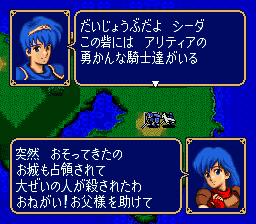
Most sequels simply continue a story. Fire Emblem: Mystery of the Emblem (1994) does something rarer: it puts a remake of the first game and a brand-new sequel on the same cartridge, then makes the sequel's true ending depend on a scavenger hunt the first game set in motion — twelve scattered star shards, five orbs, and a shield that must be made whole. Miss a single shard in Book 2 and the game does not dock your score: it ends early.
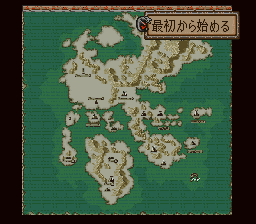
It is also, for English-speaking players, the foundational Fire Emblem they mostly know second-hand: Marth's complete Archanea saga, the origin of the Fire Emblem as an object, and the game that introduced dismounting. This guide covers the 1994 Super Famicom original — both Books, verified shard and orb tables, the units who carry a run, and the fights where runs end. It is not about the DS remake, New Mystery of the Emblem, whose systems differ in ways flagged throughout.
Quick Facts
| Item | Detail |
|---|---|
| Title (Japan) | Fire Emblem: Monshō no Nazo (ファイアーエムブレム 紋章の謎) |
| English title | Fire Emblem: Mystery of the Emblem (conventional translation; the game has no official English release) |
| Platform | Super Famicom (Japan only) |
| Release (Japan) | January 21, 1994 |
| Developer | Intelligent Systems |
| Publisher | Nintendo |
| Genre | Tactical / strategy RPG |
| Cartridge | 24 Mbit (3 MB), battery-backed save RAM (8 KB SRAM); reported as the first 24-megabit Super Famicom cartridge |
| Series position | 3rd main entry; set on the continent of Archanea (the Marth saga) |
| Structure | Two Books: Book 1 (War of Shadows, an abridged remake of the first game) + Book 2 (War of Heroes, an original sequel) — see the counting note in §1 |
| Playable cast | 60 playable characters across the two Books in total (46 in Book 1, 45 in Book 2, with heavy overlap between the Books) |
| Later re-releases (Japan only) | Nintendo Power flash service (1997), Wii Virtual Console (2006), Wii U Virtual Console (2013), New Nintendo 3DS Virtual Console (2016), Nintendo Classic Mini: Super Famicom (2017), Super Famicom – Nintendo Switch Online (2020) |
| Official English release | None — English-speaking players rely on fan translations |
| Remakes | Book 1 remade as Fire Emblem: Shadow Dragon (DS, released internationally); Book 2 remade as Fire Emblem: New Mystery of the Emblem (DS, 2010, Japan only) — both differ mechanically from this original |
Overview
Book 1, the War of Shadows, retells the first Fire Emblem: Prince Marth of Altea flees his conquered kingdom, builds the Archanean League, and marches on the Shadow Dragon Medeus. It is an abridged remake — five chapters of the Famicom original were cut, their recruitments folded into the rest — with Super Famicom improvements: visible movement range, cleaner menus, and the new dismount system (§6).
Book 2, the War of Heroes, is the new material. After a short peace, Marth is sent on campaign by his former ally Emperor Hardin, smells a trap, and ends in open rebellion against the empire he helped restore. Its backbone is lore the series reused for decades: the Fire Emblem is the Binding Shield, forged to seal the earth dragons; its five orbs power the seal; and in Book 1 Gotoh shattered one orb — the Starsphere — to forge Starlight. Book 2 is a race to reassemble the shield before the seal fails. Book 1 teaches you Gharnef, Imhullu, Starlight, Falchion and Tiki; Book 2 assumes all of it, then adds the shard hunt and an ending gate that punishes an incomplete collection without announcing itself.
Why It Still Matters
First, this is the most complete form of the Marth story in its original design. Later remakes split it in half — Shadow Dragon covers Book 1, New Mystery covers Book 2 — and changed systems as they went. The 1994 cartridge is the only place both wars exist as one continuous work by the original team.
Second, its collection design was ahead of its time. The shards are not menu key items: each bends a unit's growth rates while held, so hunting the shield's pieces is a character-building system. You collect them by playing differently — protecting a thief, not sparing a boss, opening a chest a dragon sits on. Third, it set series furniture in place: dismounting debuts here, as does the Fire Emblem as a physical shield with detachable orbs — the object at the centre of Awakening two decades later.
Highlights
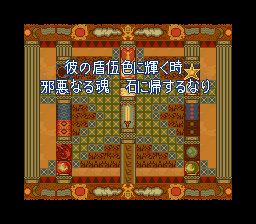
1. Two games, honestly priced as one. Book 1 alone is a full campaign; Book 2 is a second, with a mostly returning cast.
2. The shard economy. Every shard is a +40%-worth of growth modification in your pocket (one is bugged — §2). Passing shards to whoever is about to level up is a second tactical layer the game never explains and always rewards.
3. Dismounting. Indoor maps force every rider onto foot and onto swords. Your flying, lance-wielding core has a second, weaker identity to plan around.
4. An ending you can fail by omission. No choice, no timer: if the Binding Shield is incomplete at the end of Book 2 Chapter 20, the finale never happens. The game trusts you to have paid attention since Chapter 3.
Strategy Essentials
1. Chapter Structure — Two Books, and How to Count Them
Chapter counts for this game differ between references, so here is the counting made explicit rather than a single bare number:
| Counting method | Count | What it includes |
|---|---|---|
| Book 1 (War of Shadows) | 20 chapters | Chapters 1–20, ending with "Chosen by Fate" (the Medeus fight). Five chapters of the Famicom original were cut and folded into these 20 |
| Book 2, numbered chapters only | 20 chapters | Chapters 1–20, ending with "Dark Emperor" (the Hardin fight) |
| Book 2, finale counted by parts | +4 | Endgame 1 "The Wyvern's Dale" (1) + Endgame 2 "The Dragon's Table" in 3 parts (3) |
| Book 2 total, parts counted separately | 24 chapters | The figure behind the commonly quoted game total of 44 chapters (20 + 24) |
| Book 2 total, Endgame 2 counted as one chapter | 22 chapters | 20 numbered + Endgame 1 + Endgame 2 (its three parts played back-to-back with no save break before the last part in this original) |
| One full playthrough | Book 1 (20) and/or Book 2 (up to 24 by the parts count) | The Books are selected separately; Book 2 does not require a Book 1 clear, and no data carries over between them |
The practical points: Book 2 is longer and harder; its finale exists only if the Binding Shield is complete (§3); and Endgame 2's three parts — altar approach, Gharnef, Medeus — are one endurance run, so prepare before Endgame 1, not between parts.
2. The Twelve Astral Shards — Locations and Growth-Rate Effects (Book 2)
The shards are the broken Starsphere. While held, each modifies the holder's growth rates as below; effects stack. All twelve must be in your possession when you reach Gotoh in Chapter 14, where he restores the Starsphere and takes the shards. Values are this original's: the DS remake replaces them with flat stat boosts — do not mix the tables. "WLv" is Weapon Level, this game's combined weapon-proficiency stat.
| Shard | Where it is (Book 2) | HP | Str | Skill | Spd | Lck | WLv | Def | Res |
|---|---|---|---|---|---|---|---|---|---|
| Aries | Held by Arlen — dropped if he is killed as an enemy (Chapter 10) | — | — | — | — | +40% | — | — | — |
| Taurus | Dropped by enemy Lykke, Chapter 3 | +5% | +5% | +5% | +5% | +5% | +5% | +5% | +5% |
| Gemini | Dropped by enemy Torus, Chapter 5 | — | +30% | — | — | — | −10% | +20% | — |
| Cancer | Dropped by enemy Lang, Chapter 6 | — | −10% | — | — | — | — | +50% | — |
| Libra | Chest, Chapter 6 | −10% | — | — | +40% | +10% | +10% | — | −10% |
| Scorpio | Dropped by enemy Thief, Chapter 7 | — | +20% | +20% | +10% | −10% | — | — | — |
| Leo | Dropped by enemy Thief, Chapter 8 | — | +50% | — | — | — | — | −10% | — |
| Sagittarius | Held by Jeorge, Chapter 8 — dropped if he is killed as an enemy (see warning) | −10% | — | +40% | +10% | — | — | — | — |
| Virgo | Held by Minerva when she joins (Chapter 9) | — | — | — | — | — | +20% | −10% | +30% |
| Capricorn | Chest, Chapter 9 | +20%* | — | −10%* | −10%* | — | +30%* | +10%* | — |
| Aquarius | Held by Samuel (Samto) — dropped if he is killed as an enemy | — | +10% | +10% | +10% | — | +10% | — | — |
| Pisces | Chest, Chapter 12 (a Fire Dragon sits on it in this original) | +10% | — | — | — | +10% | — | +10% | +10% |
* Capricorn is bugged in this original: the listed modifiers are the intended values, but due to a glitch they are not actually applied. Treat Capricorn as a pure key item — collect it for the shield, but do not plan a build around it. This is an original-only defect, faithfully worth knowing before you waste levels on it.
Warnings that decide whether you get the true ending:
- Sagittarius can be lost permanently here. It sits in Jeorge's inventory in Chapter 8; if Jeorge was killed in his earlier appearance (Chapter 5), it is unobtainable. (The DS remake patches this — one of several places it is kinder.) Keep Jeorge alive.
- Boss-held shards require the kill and the drop — Aries, Cancer and Aquarius sit on units you might recruit, rout around, or leave alive. Check inventories before you seize.
- Shards only help while held at the moment of levelling. Pass the relevant shard to a unit about to level — Leo (+50% Strength) and Cancer (+50% Defence) are the workhorses; Taurus is the gentle all-rounder.
3. The Five Orbs and Completing the Binding Shield (the Fire Emblem)
Marth receives the Fire Emblem itself early in Book 2 (from Linde, end of Chapter 2); holding it, he opens chests without a key. It becomes the Binding Shield only when all five orbs are set into it:
| Orb | Effect while held (this original) | Where it is (Book 2, unless noted) |
|---|---|---|
| Starsphere (Star Orb) | Prevents the holder's weapon/magic durability from decreasing; +30% to all of the holder's growth rates | Restored by Gotoh in Chapter 14 from all 12 astral shards (§2). In Book 1 it is found whole: chest, Chapter 15 |
| Lightsphere (Light Orb) | Negates the enemy's terrain bonuses, critical rate and effectiveness bonuses against the holder; negates the Darksphere | Given by Gotoh, Chapter 14. In Book 1: dropped by an enemy Thief, Chapter 15 |
| Geosphere (Earth Orb) | As obtained in Book 2 it is already broken: +10 Hit, Avoid, Critical and critical-Avoid to all allies within 3 tiles of the holder. (Intact, in Book 1, it can also be used 3 times to deal 5–15 damage to every unit on the map except the user, never below 1 HP) | Book 2: dropped by an enemy Thief, Chapter 16 (broken). Book 1: chest, Chapter 15 (intact) |
| Lifesphere (Life Orb) | Holder recovers all HP at the start of each turn (the DS remake reduces this to 20 HP) | Village, Chapter 18 — given by the King of Aurelis |
| Darksphere (Dark Orb) | Negates all damage dealt to its holder by anyone not holding the Lightsphere; it is the corrupting orb in Hardin's possession | Dropped by Hardin, Chapter 20 — only if the other four orbs are already in your possession; it then fuses automatically |
The completion condition, stated plainly: at the end of Chapter 20, if Marth holds the Fire Emblem and all five orbs have been obtained, they fuse into the Binding Shield. If even one is missing — one shard short in Chapter 14 means no Starsphere, which means no shield — the game ends after Chapter 20 with the bad ending: Endgame 1 and 2 never happen, and Medeus is never fought in Book 2. There is no fix afterwards; the last realistic audit points are Chapter 14 (shards → Starsphere + Lightsphere), Chapter 16 (Geosphere thief), and Chapter 18 (Lifesphere village — visit it before seizing).
What the completed shield does: beyond opening the finale, it banishes enemy earth dragons in the endgame — at the start of each turn, earth dragons present on the map are removed. That is the difference between a playable finale and an endless dragon flood (§5).
4. Key Units
Spellings follow common modern references; fan translations vary (Caeda also appears as Shiida).| Unit | Joins | Role and why they matter | |---|---|---| | Marth | Both Books — lord, from Chapter 1 | The only lord; his death is defeat. Holds the Fire Emblem / Binding Shield, opens chests with it, wields Falchion, recruits half the cast. Train him — Book 2's finale assumes it | | Caeda (Shiida) | Both Books | Pegasus knight and chief recruiter — her Talk conversations bring in units (Navarre in Book 1 is the famous case) no one else can. Fragile, fast, indispensable; keep her away from archers | | Ogma | Both Books | Captain of Talys's mercenaries and your early infantry anchor. In Book 2 he is also a recruitment hub: several mercenaries (Samuel among them) are talked down by Ogma | | Navarre | Both Books | The archetypal myrmidon — high Skill and Speed from the moment he joins. In Book 1 he starts as an enemy hired blade; recruit him (Caeda's Talk is the classic route) instead of duelling him | | Merric | Both Books | Mage of Khadein, wielder of the Excalibur tome. Your reliable answer to fliers and armour, and a core magic damage dealer in both Books | | Linde | Both Books | Wielder of the Aura tome, among the strongest magic damage in the game. Story-critical early in Book 2: she entrusts Marth with the Fire Emblem at the end of Chapter 2 | | Minerva | Both Books | Princess of Macedon, wyvern rider, wielder of the Hauteclere axe. Book 1: she joins only after her sister Maria is safe (recruit Maria first, then talk with Marth). Book 2: joins in Chapter 9 (visit the village with Marth) carrying the Virgo Shard — lose that recruitment and the shard goes with it | | Palla / Catria / Est (the Whitewings) | Both Books | Macedon's pegasus sisters under Minerva. Palla is the balanced veteran, Catria the faster middle sister, Est the late-joining youngest with growth potential. In Book 2, Palla and Catria arrive together at the start of Chapter 3 among your strongest early units; Est joins later in both Books. All three are bow-fragile — and suffer indoors (§6) | | Tiki | Both Books | Divine dragon child (manakete) with the Divinestone — transformed, one of the few units who reliably hurt dragons and Medeus-class enemies. Book 1: recruited via Bantu. Book 2: asleep in the Ice Dragon Temple (Chapter 14); can only be woken and recruited if you have the restored Starsphere — see §5 |
Permadeath is always on, and the cast is large (60 across both Books): the units above are those whose loss breaks a system — a recruitment chain, a shard, a tome, the ending — not merely weakens the army.
5. Trouble Spots — The Three Gates
| Fight / chapter | The problem | What actually solves it |
|---|---|---|
| Gharnef, Book 1 Chapter 18 | His tome Imhullu seals all attacks against him — ordinary weapons and magic simply do not work; he also holds the stolen Falchion | Starlight, the only tome that nullifies Imhullu. To receive it: Marth must carry both the Starsphere and the Lightsphere (both obtained in Chapter 15 — Starsphere from the chest, Lightsphere from the enemy Thief) and visit Gotoh's village in Chapter 17. Arrive at Chapter 17 without either orb and Starlight is unobtainable in this original. Give Starlight to a strong mage (Merric or Linde class of unit), kill Gharnef, recover Falchion |
| Dark Emperor Hardin, Book 2 Chapter 20 | Hardin holds the Darksphere, which negates all damage from anyone not holding the Lightsphere. He is not a stat check; he is an inventory check | Attack him with the Lightsphere holder (obtained from Gotoh in Chapter 14). Only that unit's damage gets through. Defeating him yields the Darksphere — the fifth orb — provided the other four are already yours (§3) |
| Book 2 Endgame 2 — Gharnef again, then Medeus and the earth dragons | The finale is three parts back-to-back: dragon altar, Gharnef (who holds Falchion — recover it from him in part 2), then Medeus, while earth dragons press in | Enter only with the completed Binding Shield: it banishes earth dragons at the start of each turn, which is what makes the Medeus fight a fight rather than a flood. Marth with Falchion is the designated Medeus answer — in this original, attacks against Medeus are heavily blunted for everyone else and magic is useless against him. Tiki with the Divinestone is the other dragon answer — but read the warning below |
Tiki and the Divinestone — handle with care. Tiki is not a normal recruit in Book 2. She sleeps in the Ice Dragon Temple, and Gotoh's warning is mechanical, not decorative: without the restored Starsphere she cannot safely wake, and her Chapter 14 recruitment (Marth talks to her) requires the Starsphere in hand. Miss one shard and you lose Tiki, the Starsphere, and the shield — the same failure, billed three times. If you wake her: the Divinestone has limited uses, she is your anti-dragon specialist for the dragon chapters and the finale, and losing her removes one of only two reliable Medeus-era answers (Falchion is the other). Do not spend her stone on ordinary enemies. Note that Book 1's Medeus (Chapter 20) is likewise fought with Falchion recovered from Gharnef — the Chapter 17 Starlight errand matters even if you only play Book 1.
6. Original-Only Systems — Do Not Import Remake Habits
This section exists because most English-language advice describes the DS remakes. The 1994 original plays differently:
| System | In this original (1994) | What later games / remakes do instead |
|---|---|---|
| Dismounting | On indoor maps, all mounted and flying units are forced to dismount and fight on foot as infantry; outdoors, mounting/dismounting is free. Dismounted lance users fight with swords instead (Horsemen keep bows). Movement drops, flier weaknesses disappear, stats shift | Thracia 776 keeps a version of this; most later games drop forced dismounting entirely. Plan indoor chapters (e.g. Book 2 Chapter 10) around your infantry, not your cavalry |
| Weapon triangle | Does not exist. Swords do not beat axes, axes do not beat lances, lances do not beat swords — no hit or damage modifiers of that kind apply | Introduced in the next game, Genealogy of the Holy War (1996), and present in the DS remakes. If your muscle memory adds a triangle bonus, subtract it |
| Supports | No support system — no adjacency bonuses, no paired conversations, no support-driven endings | Supports debut later in the series (and the remake adds base conversations). Positioning here is purely tactical: terrain, range, and chokepoints |
| Weapon proficiency | A single Weapon Level (WLv) stat governs what a unit can equip; there are no separate sword/lance/axe ranks to grind — which is why dismounted units can use swords competently at once | Later games split proficiency by weapon type |
| Astral shards | Modify growth rates while held (§2) — Capricorn bugged, see §2 | New Mystery turns them into flat +stat boosts while held. Same names, different items, different planning |
| Classes and cast | No Avatar, no Casual Mode, no reclassing; Book 2's cast is the fixed 45 | New Mystery adds an Avatar (Kris), Casual Mode, reclassing, extra characters and side chapters that are not in this original |
Who It's For
Play it if you want Marth's saga as originally designed, in one cartridge; if you enjoy permadeath strategy where inventory decisions (who holds which orb, shard, or stone) are as decisive as movement; or if you are tracing where series ideas — dismounting, the shield-and-orbs Fire Emblem, load-bearing collectables — began. It is a demanding first Fire Emblem: no Casual Mode, no supports, an under-explained ending gate, and (for English speakers) a fan-translation step first. DS-remake veterans should come precisely because it is not the game they remember.
How to Play It Today
As of November 2026, the confirmed official routes are all Japanese; availability can change, so check current listings before relying on any route below. There is no official English version on any platform.
- Nintendo Switch (Japan): In the Japanese Super Famicom – Nintendo Switch Online / Nintendo Classics app (added September 23, 2020); requires a Switch Online subscription and access to the Japanese app. Text is Japanese.
- Original cartridge: Japanese cartridges circulate widely second-hand and play on any setup that handles Japanese Super Famicom cartridges. The save battery is over three decades old — assume it may need checking or replacement. Buy a cartridge here:
- Mini console: The Japanese Nintendo Classic Mini: Super Famicom (2017) includes the game built in — a legitimate, increasingly collectible route.
- Older Virtual Console versions (Wii, Wii U, New Nintendo 3DS) were Japan-only and those download services have closed.
- The remakes instead: Shadow Dragon (DS) retells Book 1 with the weapon triangle and modern conveniences, released internationally; New Mystery of the Emblem (DS) retells Book 2 but is Japan-only. Both differ mechanically (§6) — a good route in, not a substitute.
- In English: Only fan translations exist for this original; they are unofficial, and this article's spellings follow modern reference conventions rather than any single patch.
Find the original Japanese cartridge
Disclosure: The Rakuten and Yahoo! Shopping links are standard shopping links. Enkeisha does not earn a commission from purchases made through these links.
Find original hardware editions on eBay
As an eBay Partner Network affiliate, Enkeisha may earn a commission from qualifying purchases made through these links.
Search eBay listings (affiliate link)
Check the language, region, hardware compatibility, condition and authenticity before buying. Search results may include reproductions; links do not endorse individual sellers.