Akimi Yoshida · Shogakukan · Complete in nine Japanese volumes
Umimachi Diary
An extra jar for a fourth sister
Read the reviewA batch for Suzu
When the green plums come off the tree, Sachi sets some aside. The family usually puts the fruit up in liquor. This time, there’s another jar on the veranda, made with vinegar so thirteen-year-old Suzu can drink it. Sachi had promised to make her a batch when the plums came in again. In Akimi Yoshida’s Umimachi Diary, it takes until the following summer for an invitation to show up as a jar you can hold in your hands.
Suzu meets her three older half sisters at their father’s funeral. Sachi makes her offer on a station platform, just before the train doors close. There’s a spare room in the sisters’ old house in Kamakura, she says, and all three of them work. They can afford to have one more person. I love how practical this life-changing conversation is. Someone has thought about where Suzu will sleep and who will pay for dinner. Now Suzu can think about whether she wants to go.
Two profiles at a funeral
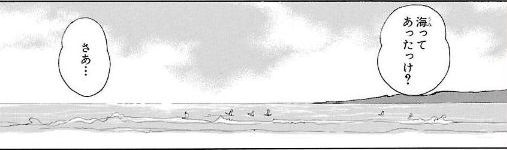
Yoshino remembers a father who was kind to her when she was little. Chika barely remembers him. On the way to the funeral, the two spread out their snacks and wonder if there’s a coast where they’re headed. In a long, low panel, their speech balloons hang a little way apart over the sea. All that water buys a beat before the conversation moves on. By the time they arrive in the mountain town, the sound of cicadas is spilling out of a panel. Suzu takes the local shortcut uphill and the visitors struggle to keep up.
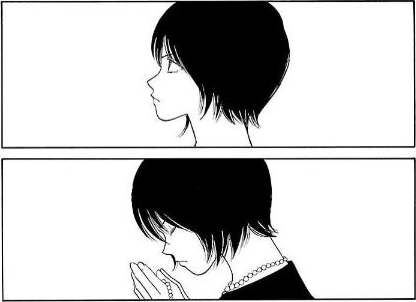
At the funeral, Yoshida draws Suzu in profile, then sets Sachi’s profile directly beneath hers. The dark hair falls in much the same place in both frames. Then Sachi lowers her eyes and presses her palms together. Suzu spent her father’s last illness looking after him, and she can read a room in the unnerving way Sachi could when she was a child. The shape of their faces gives us the family resemblance. The timing makes us consider how both girls learned to anticipate what an adult might need.
The lives people have outside the house
Sachi, a nurse, steps in when someone hesitates. Her sisters are also familiar with the speed at which she can make up their minds for them. Yoshino first appears hungover in someone else’s bedroom, trying to ignore a ringing phone. Watch her at the credit union later in the series and you see how direct she can be when a client’s real worries have slipped out of a conversation about money. Then there’s Chika. She’s the one you want beside you on a long train ride, and the one who remembers exactly what their grandmother’s curry tasted like. When she makes it with chikuwa, a springy tube of grilled fish paste, the taste becomes part of a dinner Suzu gets to remember too.
At football practice, Suzu has the nerve to play an early pass and the freedom to talk like a teammate. Her friend Miho knows that version of her. When the point of view moves over to Fūta, he tries to guess what their friend Yūya needs and gets it wrong. Yūya would like a chance to tell them himself. Even the keenest listeners in this manga can rush into the gap where another person was about to speak.
The cast grows to include coworkers, patients and customers at the neighbourhood restaurants. After a break between volumes I sometimes remembered where a character sat before I could remember their name. Yoshida makes it a pleasure to find one’s way back. She’ll let a table fill with talk, then give a single panel to the sea. On the shore you can feel the time somebody needs before they start speaking again.
The things a season asks of you
Ume is a tart fruit, usually called a plum in English. Pick it green at the beginning of summer, put it up with liquor or with sugar and vinegar, and you have something to bring out long after picking is over. The work comes round every year. By the time the old tree starts giving less fruit, the friends who used to help with the harvest have tried making batches of their own. Familiar chores keep giving someone new a chance to take a turn.
There’s a similar pleasure in following a plate of fried horse mackerel from the neighbourhood diner to a café across the way. Someone remembers what went into it. Someone else does the frying. When a customer can order it again, you can be glad of that and still miss the place where you first saw it served. Yoshida is patient about showing where those two feelings come from.
The Kamakura of this book is a place you learn by going to practice, running into somebody at a crossing, or taking the long way home. Readers coming from Hirokazu Kore-eda’s film Our Little Sister already know something of its roads and rooms. Give the manga time to let you stop at a face. A panel you barely paused over early on can be the one you go back for several volumes later.
Who will look after the tree?
Open the ending discussion (major spoilers)
Suzu brings something to the table
In volume three, after a painful farewell, Sachi is the one sitting down and Suzu pours her the plum drink. By volume eight, Sachi learns how much blame Suzu still carries for her father’s last days and makes clear that the decisions about his care belonged to the parents. In the same volume, a whole salmon arrives from the older sisters’ mother. Suzu turns some of it into little rice balls for Chika, who remembers the packed lunches her grandmother and Sachi made for her. I like that Suzu gets to stop holding herself responsible for the adults and still gets to do something kind for one of her sisters, on a scale she chooses.
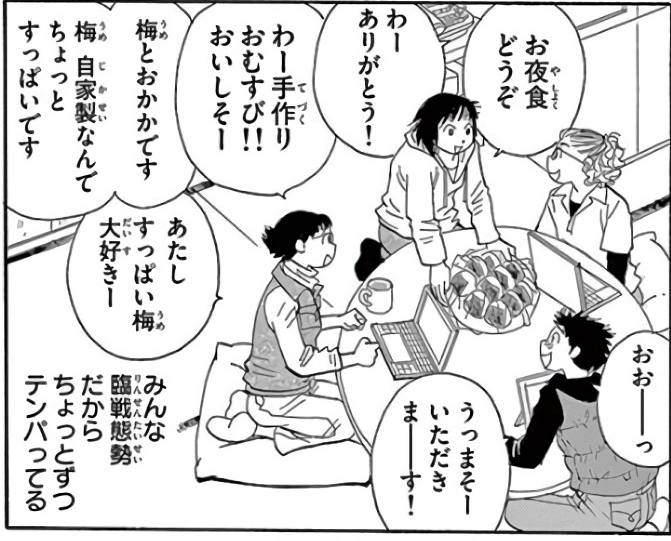
When an avalanche on Everest leaves Chika waiting for news of her husband in the final volume, the sisters make rice balls for a houseful of people. These plums are sour, salted umeboshi, preserved by the girls’ great-aunt using their grandmother’s recipe. Suzu sets the food beside an open laptop. For a moment, everybody at the table looks up. A fruit Sachi once set aside for one girl now helps feed a whole room through the wait. Once the news comes, Suzu and Fūta sit out on the veranda, eat the sour plums and wonder whether the tree will flower again.
A goodbye with a return built in
The plum tree flowers in the snow. Fūta has been looking after its branches. When Suzu leaves for high school in Shizuoka, where she’ll play football, he tells her he’ll keep taking care of it. Sachi misses the send-off to sit with a dying patient. Yoshino eats breakfast with Suzu and asks her to call when she arrives. Chika’s baby, born on graduation day, is sleeping. Fukuda sets off for the Himalayas with a photograph of Ninomiya, the woman who ran the diner. Within a few pages, a room goes quiet and the train pulls away. Yoshida gives each departure its own weight.
At Gokurakuji Station, Suzu admits she’s nervous before saying itte kuru, the everyday farewell that holds the expectation of coming back. In the first volume she was the girl on the platform watching her sisters’ train leave. Now the sea opens out beyond her window, and she can imagine how far she might go. Someone she trusts will be there to tend the tree in the meantime.
The bonus chapter takes Suzu back to the mountain town and lets us see her through Kazuki’s eyes. However briefly they lived in the same house, she was his big sister. The town has two rivers that run near each other and reach the sea separately. In the last few pages, after a shower, the two have a short stretch of road to walk together. Yoshida leaves us there, a long way from the Kamakura garden, with another place Suzu can come back to.
Where to start reading
Start with volume one of Akimi Yoshida’s Umimachi Diary. Shogakukan’s Japanese edition is complete in nine volumes. The first Japanese paperback is ISBN 9784091670250. Kana publishes it in French as Kamakura Diary, and Panini publishes it in Spanish as Nuestra hermana pequeña: Diario de una ciudad costera.
The publisher catalogs checked on November 19, 2026 did not turn up an official English-language edition of the manga. Our Little Sister is the English title of the live-action film.
Enkeisha may earn a commission from qualifying purchases through affiliate links in this section.